Wednesday, September 30, 2009

Teenage Bottlerocket — They Came From The Shadows

I fell in love with this midwestern U.S. punk band's infectious "Radio" when I first heard it in early 2008 and checked the group out at last year's South By Southwest Music Festival in Austin, Texas.
I wasn't blown away, but enjoyed the performance enough to make me happy to see this new album — the group's third, but first for Fat Wreck — arrive in the mail.
The title track and "Not OK" remind me of The Misfits. I can also hear elements of The Ramones and Chixdiggit, but with more aggression and better guitar-playing, in several tracks. Lead single/video "Skate Or Die" seems to have a mission to make skateboarding seem rebellious and dangerous again. The tongue-in-cheek "Bigger Than KISS" name-checks other bands and songs, too, and is harder than most of the melodic punk found in these 14 tracks. "Fatso Goes Nutzoid" isn't as crass as the title suggests and instead sends a message about body image that young fans should take note of.
I'll give this a 7/10 and will likely go see Teenage Bottlerocket again when it plays Toronto's Kathedral on Oct. 27.
You can find out more at www.teenagebottlerocket.com.

Hugh Dillon Works Well With Others 
I'm interviewing Hugh Dillon, the former Headstones frontman and now successful actor, tomorrow. He has an album called Works Well With Others coming out on Oct. 13 through Warner Music Canada, and I've had a few listens this morning to become acquainted with it.
I like it. It's not the hard-edged rock of The Headstones, but it has more bite than the Hugh Dillon Redemption Choir's 2005 album, The High Cost Of Low Living.
Lead single/video "Friends Of Mine" opens the album and begins acoustically before picking up the pace and volume later on.  The swampy "Ten Feet Tall" is the most traditionally rock and roll song on the disc and ends with a harmonica. "Surface Of The Sun" features piano and acoustic guitar, but it's far from a ballad. The keyboards in the first part of "Reel To Reel" had me thinking it was going to be a dance song. Luckily, it isn't. A section of "Lost At Sea" is vaguely Leonard Cohen-like.
There are no stinkers on here and I'll give it an 8/10 rating. Works Well With Others will also be going in my pile of CDs to consider for next year's Polaris Music Prize.
You can listen to the album now on Dillon's website.

Tuesday, September 29, 2009


Calling All Punks
Los Angeles' BYO Records is celebrating its 25th anniversary with last week's release of a 31-song CD compilation and DVD titled Let Them Know: The Story of Youth Brigade and BYO Records, which features artists who've graced the roster at some point over the years. 
I haven't had a chance to check out the 88-minute documentary yet, but the CD has some prime punk material. As you'd expect from 31 tracks, the quality can be up and down, but my personal favourites are Off With Their Heads' "Headlights...ditch!," Youth Brigade's "Misfortune," Lagwagon's "S.O.S.," Blue Collar Special's "Believe In Something," American Steel's "Dead And Broken," Complete Control's "Victoria," Old Man Markley's "We're In!," The Ignorant's "Keep On," Ch3's cover of The Nils' classic "Scratches & Needles" and 7 Seconds' "Sink With California." 
Other contributors include Bouncing Souls, NOFX, The Cute Lepers, Pennywise, Dropkick Murphys, Anti-Flag and Subhumans.
If you've followed American punk rock over the past 25 years, there's probably something here for you.

The Kinks Choral Collection
The Kinks Choral Collection, featuring Ray Davies and the 65-member Crouch End Festival Chorus, will be released on Nov. 10 via Decca. Lots of familiar favourites are included with the new arrangements, including "Days," "Waterloo Sunset," "You Really Got Me," "Victoria,' "All Day And All Of The Night" and a six-song suite from 1968's The Kinks Are The Village Green Preservation Society. You can hear samples on Amazon and, while I prefer the original versions, this should still be of interest to Kinks completists.

Monday, September 28, 2009

Ox — Burnout
The follow-up to 2006's American Lo Fi is a seven-song EP of the same sort of rootsy pop we've come to expect from the former Vancouver band that now calls Sudbury, Ont. home. "Burnout" is a rock and roll road song that gets the disc off to a strong start. "Prom Queen" and "Ojibway Diner" are also standouts and "Miss Idaho Redux," a slightly different version of my favourite Ox song, "Miss Idaho," closes things out.
You can find out more at www.oxmusic.ws and www.myspace.com/oxmusic

Saturday, September 26, 2009

The Warped 45s — 10 Day Poem For Saskatchewan

This Toronto quintet's manager, Tina Cooper, gave me this CD at last week's Polaris Music Prize gala. Just like the group's self-titled debut EP, it was produced by her boyfriend John Critchley (13 Engines, Elliott Brood). It's been licensed to Kim Cooke's Pheromone Recordings label and it's a step up from the EP. If you like The Band, you should give 10 Day Poem For Saskatchewan a listen. 

You can find out more at www.thewarped45s.com or www.myspace.com/thewarped45s
Jamaican Food In Stratford, Ontario
Stratford, Ont. now has a Jamaican restaurant named Olive's. It has a great location less than a block from the Avon Theatre, but, when my mom and I went there at the normally busy pre-show time of 5:30 on Friday, we were the only customers in the restaurant. Two other people came in, looked at the menu, and then left. That was the extent of business during our dinner.
That's a shame because the home-style food was tasty and reasonably priced and the portions were very large. Appetizer patties were two dollars. We then got complimentary salads. My mom ordered jerk pork with rice and beans, and I ordered boneless jerk chicken with rice and beans. You can tell the server how spicy you want it (we like it hot), and Olive came out of the kitchen with some scotch bonnet sauce that we used to liven up the rice.
All of this came to less than $32, and there was enough food left over that I'll be enjoying it again tonight.
The recently opened restaurant is clean and neat, if not classy, and there was a mix of gospel and Bob Marley playing over the speakers. Food can be ordered to take out. One drawback to some may be the lack of a liquor licence.
Olive was very gracious and I'd like to see her succeed. Since I'm sure you can probably count the number of Jamaicans in Stratford on one hand, I'm not sure if it can survive the winter once the tourists leave. And if tourists aren't going now, the outlook isn't good.
So if you like Jamaican food and you're in the Festival City, please pay Olive a visit.

Saturday, September 19, 2009

Rancid — Let The Dominoes Fall

Rancid may head my list of top punk bands from the past 15 years, and Indestructible was my favourite album of 2003, but it's been a six-year wait for this follow-up. Let The Dominoes Fall came out in June and I'm almost embarassed to say I didn't get a copy of it until last week. It doesn't quite match its predecessor, but it's a strong 8/10 album that features the type of melodic punk with hints of ska (and even a bit of rockabilly on a couple of these cuts) that I've come to know and love. The most notable track is probably "Up To No Good," which features a ska rhythm, horns and keyboards by the legendary Booker T. Jones. "Civilian Ways" offers a rootsy change of pace and throws in some mandolin. "Skull City" sounds like it could have been from one of Iggy's Pop's more recent albums. There are lots of other highlights, but you'll have to get the album and discover them for yourself.

Friday, September 18, 2009


Hugh Cornwell brought his Hooverdam tour to Toronto's Mod Club on Thursday night, and the man proved he's not mellowing with age.
The show lasted 85 minutes and by and large featured a mix of material from last year's Hooverdam (which I'd rate as a very solid 7/10) and vintage material from The Stranglers, the brilliant art-punk band Cornwell formed 35 years ago and left after 1990's 10.
Cornwell was accompanied by Chris Bell, an accomplished drummer who previously played with the Thompson Twins and Gene Loves Jezebel, and rock-solid bassist Christine "Chaz" Campbell. They both played on Hooverdam and have been working with Cornwell — a very underrated guitarist, intriguing songwriter, precise singer and an unfailingly polite man when you talk to him — for a few years. Their ease with each other is evident on stage and creates a power trio in every sense of the term.
Dave Greenfield's keyboard flourishes, which made The Stranglers sound so distinctive compared to many of their early contemporaries, are definitely missed — particularly on "Duchess." But Cornwell's solos sometimes made you forget about them and got you thinking about old songs in whole new ways. The bass-heavy "Golden Brown" was an excellent example of that on Thursday.
I was disappointed in a crowd of what I estimated to be about 125 people, but there was stiff competition with U2 and Marilyn Manson having gigs around town and Toronto still caught up film festival fever. But what Cornwell lacked in spectacle, which those other options were full of, he made up for with songs — and that will almost always take precedence for me.
The Hooverdam material included the powerful "Going To The City" and the ominous-sounding "Delightful Nightmare" as well as "Rain On The River," "Within You Or Without You," "Please Don't Put Me On A Slow Boat To Trowbridge" and, in the encore, the excellent "Beat Of My Heart."
But it was the Stranglers material that drew the biggest responses, and there's no arguing that it deserved them. The main set featured "Nice N' Sleazy" (which featured a great bass line from Campbell), "Walk On By" (which was written by Burt Bacharach and Hal David, but covered by The Stranglers), the aforementioned "Duchess" and "Golden Brown," and "No More Heroes," which  may have elicited the most dancing of the night.
After a brief trip to the dressing room, Cornwell returned and addressed someone in the front who'd been taking pictures earlier.
"I don't mind photos, but no flash," he said. "You should be outside of a girl's primary school."
Appropriately, after that comment, he launched into "Peaches." It somehow sounds creepier coming from a 60-year-old than it did when it was released when Cornwell was 28, but it's still a great song.
The amazing "Hanging Around" again featured a blistering Cornwell guitar solo in place of the keyboards from the original version. It got people dancing again and set the stage for an extended "Down In The Sewer." 
Cornwell had earlier invited me to join him for drinks at a neighbouring Italian restaurant, but I decided that by the time he left the stage and graciously signed autographs at the merch table that I was probably better advised to go home and make a late dinner. If I hadn't made the opposite decision when put in a very similar situation with a member of a different band just four nights earlier, I almost would have thought I was finally maturing.

Friday, June 26, 2009


Richard Flohil Turns 75

Friend, former co-worker, publicist, promoter, journalist and artist manager Richard Flohil celebrated his 75th birthday among friends and musicians at Toronto's Horseshoe Tavern on Thursday night.

I was reviewing the Jonathan Richman/Vic Chesnutt show at The Great Hall and didn't arrive at the party until midnight, when Blue Rodeo's Jim Cudddy was performing. The lovely and talented Heather Morgan (who unfortunately didn't perform) immediately gave me a piece of birthday cake to accompany my pint.

The Beauties, which can usually be found at The Dakota Tavern, was a great choice as the house band. Justin Rutledge joined it for a killer version of "California Stars" and the five-guitar assault on "Don't Be So Mean, Jelly Bean" had people going crazy. I'd never seen Rutledge rock so hard.

Luke Doucet and wife Melissa McClelland joined The Beauties for a great version of "Blood's Too Rich" and a cover of The Band's "Ophelia." Hey Stella, David Baxter, Downchild Blues Band's Donnie Walsh, Teresa Levasseur and Paul Reddick were among the others who impressed, while the likes of Stony Plain Records' Holger Petersen and CBC Radio head Denise Donlon also paid tribute to Richard from the stage.

Richard got an extra treat when singer/actress/burlesque performer Sonya "Jezebel" Cote sang a French chanson and then stripped for the grinning Englishman as he sat in a tattered chair and did his best to keep his hands to himself.

It was a fun night deserving of the man of honour. Happy birthday, Richard, and many happy returns.

Monday, February 16, 2009


Revisiting The Vietnam War From Ho Chi Minh City

It's a 75-kilometre journey from the heart of Vietnam's Ho Chi Minh City northwest to the Cu Chi tunnels, and our bus has to weave through a mass of status symbol motorbikes (with those made in Japan at the top, Korea in the middle and China at the bottom of the scale) on the crowded streets and pass both bustling construction sites and women holding live ducks and chickens to sell on the curbside.

This taste of the hectic city of about eight million people (and formerly known as Saigon) in the southeastern part of the country eventually gives way to the countryside, where the soil is improving but harvests are still less than what they should be because of all the chemicals remaining in the ground from the war in the '60s and '70s. Rubber trees are the biggest agricultural product in the area, which includes a war memorial and the burial place of 4,000 Vietnamese soldiers that we stop at briefly on the way to the tunnels that were used as a key base of operations for the 1968 Tet Offensive by Viet Cong troops.

The tunnels began in 1948 and about 200 kilometres of them were connected to one another by 1965. A small portion have now been opened up to visitors as a tourist attraction to show the key role they played in housing and transporting people and supplies during the war between the communists from the north and the American-backed people of the south. They included wells, sleeping chambers, kitchens, storage areas, conference rooms and hospitals and were largely equipped with materials scavenged or stolen from U.S. troops based on top of them. Those living below would usually spend their days working or resting and emerge at night through camouflaged trap doors to tend crops or engage in covert military activities.

Upon arrival at the visitor centre, we're shown a short documentary on how the three levels of tunnels were used and how people became heroes for becoming adept "American killers." We were then shown large bomb craters and examples of below-ground booby-traps utilizing bamboo spikes or whatever else could be found and assembled to inflict damage on enemy forces.

We were invited to go through a first-level tunnel, which required some bending over, but wasn't too taxing. The second-level tunnel had a very small entrance that even a relatively short and slim person like myself could barely fit through. Some people in our group couldn't make it and others didn't even attempt it. It was dark, but the journey below was pretty short.

The third-level tunnel, however, was definitely an adventure. I found that crab-walking was the easiest way to get through the tiny lower passages, especially a few where bats brushed my scalp as they flew by. After 20 minutes, I emerged sweaty, dirty and a bit dizzy.

I couldn't imagine staying there for prolonged periods, even in this gentrified state without as many insects and the rampant malaria outbreaks that would sweep through the tunnels. Life was harsh — with little air, food or water — but people survived and kept the war going against superior forces that could do little to stop them.

We were then given tea and raw tapioca, which grows in the area and which I discovered I enjoy much more as a pudding ingredient.

I declined the opportunity to choose from a range of assault rifles that could be fired at targets for five dollars for five bullets — the same price I paid for admission to the tunnel complex. I was here to learn about the hardships and horrors of war, not to pretend I was taking part in one.

I walked around the grounds — which include old army tanks, shells, bombs and a rudimentary zoo with caged monkeys, porcupines and boa constrictors — and stopped to talk to some U.S. Vietnam war veterans who were also visiting. While this was a moving experience for me, it was much more so for them, and some were moved to tears in recounting their experiences.

After returning to Ho Chi Minh City in the afternoon, my quest to find out more about the war firsthand took me to the government-operated War Remnants Museum. It features eight themed rooms and a walled yard featuring weapons, tanks, planes, helicopters, recreations of the "tiger cage" cells used by the South Vietnamese government and a room dedicated to the anti-war protests that happened around the world.

There was also a tribute to photojournalists who were killed while covering the war. Most stirring were the photos taken by these brave men and women who risked their lives to document the atrocities committed by both sides. There were also numerous disturbing shots of what happened to the victims of U.S. chemical warfare.

The third and final stop of my exploration of the war around Ho Chi Minh City took me to the Reunification Palace, the home and workplace of the South Vietnamese president during the hostilities. It was also the site of the official handover of power during the capture of Saigon by the North Vietnamese army on April 30, 1975 that ended the war.

The palace is open to the public today, and I took a one-hour guided tour conducted in English by a young woman. We were shown basement tunnels, conference rooms, the presidential receiving room, the telecommunications centre and the war room as well as living quarters during the enlightening and educational session, which was followed by a documentary on the building and the war.

It's hard to imagine the horrors that went on in Vietnam less than 35 years ago when encountering the people who seem so friendly and helpful today. A lot has changed in the country in a hurry, almost all of it for the better, but it's important not to forget the past so mistakes made then don't reoccur.

Sunday, January 18, 2009

Hiking The Great Wall Of China At Jinshanling

While both tourists and Chinese citizens jostle with each other and an array of souvenir vendors at the crowded Badaling section of the Great Wall 70 kilometres northwest of Beijing, I negotiated my way past a farmer and a herd of goats on a narrow mountain path in Jinshanling.

Jinshanling is a poor, tiny village 120 kilometres northeast of Beijing. It's also the starting point for a hike along what is often referred to as the "Wild Wall." I had taken a van with nine other people on the two-and-a-half-hour trip to get here, but quickly left them behind on my 40-minute climb to where this section of the Great Wall begins.

Visiting the Great Wall would be the highlight of my 18 days in China, and I wanted to experience its ruggedness by myself as much as I could. And aside from a handful of intrepid souvenir hawkers — primarily selling books, postcards, T-shirts and drinks — I pretty much achieved my goal.

While I walked quickly, I certainly didn't rush. The incredible views of the surrounding mountains and seemingly endless wall extending into the horizon in both directions made sure of that. Construction of this section of the wall, which extends 10 kilometres to Simitai, began in 1570 during the Ming Dynasty. It's comprised of five main passes, 67 watchtowers and two beacon towers, and was built from 12-kilogram bricks.

It can be tiring just getting up here with a small backpack filled with food, drinks, a camera and extra clothes for in case the weather turns wet or windy, so it's almost unimaginable what it would have been like to haul heavy bricks up the mountain to build the wall. It truly is one of the greatest engineering feats of all time, considering it winds its way through thousands of kilometres of rugged and mountainous terrain. I stopped to eat a pear and soak in the rich atmosphere while paying my respects at one of the spots on the wall where soldiers had carved their names some 400 years ago.

Parts of the wall have been restored to its original condition, while other sections have been allowed to deteriorate and you're forced to take mountain paths where it has become impassable. There are many steep inclines and stairs, and you'll occasionally have to contend with rocks and fragmented bricks, so appropriate footwear, a good fitness level and previous hiking experience are all recommended. Those wary of suspension bridges should also be aware that you have to cross a small one — and pay five yen to do it.

The journey can comfortably be completed in three to five hours, depending on how often you stop to rest, take photos or simply gaze at the wonderful panorama.

While taking in the bright lights of Shanghai, cruising through the three gorges on the Yangtze River, marveling at the terra cotta warriors outside of Xi'an and wandering through the Forbidden Palace in Beijing are all must-sees in China, you won't have a more exhilarating experience in the country than walking the "Wild Wall" in Jinshanling.

Admission fee: 50 yen and an additional five yen to cross suspension bridge

Wednesday, February 22, 2006

If you're a Roy Orbison fan, but maybe even more if you're not, and you have a very warped sense of humour, you must check out:
http://www.michaelkelly.fsnet.co.uk/karl.htm

Saturday, February 04, 2006


Orleans' Waking And Dreaming has been making the rounds in cyberspace as one of the worst or funniest album covers ever, but John Hall (he's the guy in the middle) may have the last laugh. He's running for the U.S. Congress in the 19th District of New York. I'm willing to bet that he's not opposed to gay marriage legislation and that his campaign slogan is "Still The One."

Tuesday, January 31, 2006


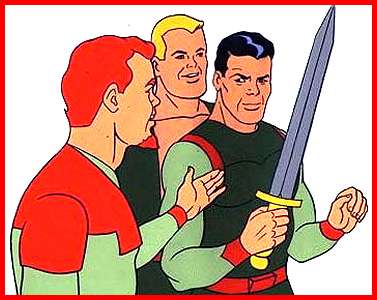
Len Carlson, the voice of Rocket Robin Hood, died on Jan. 26 at age 68. He only had 994 years to go until the astounding year, 3000.