Monday, February 16, 2009


Revisiting The Vietnam War From Ho Chi Minh City

It's a 75-kilometre journey from the heart of Vietnam's Ho Chi Minh City northwest to the Cu Chi tunnels, and our bus has to weave through a mass of status symbol motorbikes (with those made in Japan at the top, Korea in the middle and China at the bottom of the scale) on the crowded streets and pass both bustling construction sites and women holding live ducks and chickens to sell on the curbside.

This taste of the hectic city of about eight million people (and formerly known as Saigon) in the southeastern part of the country eventually gives way to the countryside, where the soil is improving but harvests are still less than what they should be because of all the chemicals remaining in the ground from the war in the '60s and '70s. Rubber trees are the biggest agricultural product in the area, which includes a war memorial and the burial place of 4,000 Vietnamese soldiers that we stop at briefly on the way to the tunnels that were used as a key base of operations for the 1968 Tet Offensive by Viet Cong troops.

The tunnels began in 1948 and about 200 kilometres of them were connected to one another by 1965. A small portion have now been opened up to visitors as a tourist attraction to show the key role they played in housing and transporting people and supplies during the war between the communists from the north and the American-backed people of the south. They included wells, sleeping chambers, kitchens, storage areas, conference rooms and hospitals and were largely equipped with materials scavenged or stolen from U.S. troops based on top of them. Those living below would usually spend their days working or resting and emerge at night through camouflaged trap doors to tend crops or engage in covert military activities.

Upon arrival at the visitor centre, we're shown a short documentary on how the three levels of tunnels were used and how people became heroes for becoming adept "American killers." We were then shown large bomb craters and examples of below-ground booby-traps utilizing bamboo spikes or whatever else could be found and assembled to inflict damage on enemy forces.

We were invited to go through a first-level tunnel, which required some bending over, but wasn't too taxing. The second-level tunnel had a very small entrance that even a relatively short and slim person like myself could barely fit through. Some people in our group couldn't make it and others didn't even attempt it. It was dark, but the journey below was pretty short.

The third-level tunnel, however, was definitely an adventure. I found that crab-walking was the easiest way to get through the tiny lower passages, especially a few where bats brushed my scalp as they flew by. After 20 minutes, I emerged sweaty, dirty and a bit dizzy.

I couldn't imagine staying there for prolonged periods, even in this gentrified state without as many insects and the rampant malaria outbreaks that would sweep through the tunnels. Life was harsh — with little air, food or water — but people survived and kept the war going against superior forces that could do little to stop them.

We were then given tea and raw tapioca, which grows in the area and which I discovered I enjoy much more as a pudding ingredient.

I declined the opportunity to choose from a range of assault rifles that could be fired at targets for five dollars for five bullets — the same price I paid for admission to the tunnel complex. I was here to learn about the hardships and horrors of war, not to pretend I was taking part in one.

I walked around the grounds — which include old army tanks, shells, bombs and a rudimentary zoo with caged monkeys, porcupines and boa constrictors — and stopped to talk to some U.S. Vietnam war veterans who were also visiting. While this was a moving experience for me, it was much more so for them, and some were moved to tears in recounting their experiences.

After returning to Ho Chi Minh City in the afternoon, my quest to find out more about the war firsthand took me to the government-operated War Remnants Museum. It features eight themed rooms and a walled yard featuring weapons, tanks, planes, helicopters, recreations of the "tiger cage" cells used by the South Vietnamese government and a room dedicated to the anti-war protests that happened around the world.

There was also a tribute to photojournalists who were killed while covering the war. Most stirring were the photos taken by these brave men and women who risked their lives to document the atrocities committed by both sides. There were also numerous disturbing shots of what happened to the victims of U.S. chemical warfare.

The third and final stop of my exploration of the war around Ho Chi Minh City took me to the Reunification Palace, the home and workplace of the South Vietnamese president during the hostilities. It was also the site of the official handover of power during the capture of Saigon by the North Vietnamese army on April 30, 1975 that ended the war.

The palace is open to the public today, and I took a one-hour guided tour conducted in English by a young woman. We were shown basement tunnels, conference rooms, the presidential receiving room, the telecommunications centre and the war room as well as living quarters during the enlightening and educational session, which was followed by a documentary on the building and the war.

It's hard to imagine the horrors that went on in Vietnam less than 35 years ago when encountering the people who seem so friendly and helpful today. A lot has changed in the country in a hurry, almost all of it for the better, but it's important not to forget the past so mistakes made then don't reoccur.

Sunday, January 18, 2009

Hiking The Great Wall Of China At Jinshanling

While both tourists and Chinese citizens jostle with each other and an array of souvenir vendors at the crowded Badaling section of the Great Wall 70 kilometres northwest of Beijing, I negotiated my way past a farmer and a herd of goats on a narrow mountain path in Jinshanling.

Jinshanling is a poor, tiny village 120 kilometres northeast of Beijing. It's also the starting point for a hike along what is often referred to as the "Wild Wall." I had taken a van with nine other people on the two-and-a-half-hour trip to get here, but quickly left them behind on my 40-minute climb to where this section of the Great Wall begins.

Visiting the Great Wall would be the highlight of my 18 days in China, and I wanted to experience its ruggedness by myself as much as I could. And aside from a handful of intrepid souvenir hawkers — primarily selling books, postcards, T-shirts and drinks — I pretty much achieved my goal.

While I walked quickly, I certainly didn't rush. The incredible views of the surrounding mountains and seemingly endless wall extending into the horizon in both directions made sure of that. Construction of this section of the wall, which extends 10 kilometres to Simitai, began in 1570 during the Ming Dynasty. It's comprised of five main passes, 67 watchtowers and two beacon towers, and was built from 12-kilogram bricks.

It can be tiring just getting up here with a small backpack filled with food, drinks, a camera and extra clothes for in case the weather turns wet or windy, so it's almost unimaginable what it would have been like to haul heavy bricks up the mountain to build the wall. It truly is one of the greatest engineering feats of all time, considering it winds its way through thousands of kilometres of rugged and mountainous terrain. I stopped to eat a pear and soak in the rich atmosphere while paying my respects at one of the spots on the wall where soldiers had carved their names some 400 years ago.

Parts of the wall have been restored to its original condition, while other sections have been allowed to deteriorate and you're forced to take mountain paths where it has become impassable. There are many steep inclines and stairs, and you'll occasionally have to contend with rocks and fragmented bricks, so appropriate footwear, a good fitness level and previous hiking experience are all recommended. Those wary of suspension bridges should also be aware that you have to cross a small one — and pay five yen to do it.

The journey can comfortably be completed in three to five hours, depending on how often you stop to rest, take photos or simply gaze at the wonderful panorama.

While taking in the bright lights of Shanghai, cruising through the three gorges on the Yangtze River, marveling at the terra cotta warriors outside of Xi'an and wandering through the Forbidden Palace in Beijing are all must-sees in China, you won't have a more exhilarating experience in the country than walking the "Wild Wall" in Jinshanling.

Admission fee: 50 yen and an additional five yen to cross suspension bridge

Wednesday, February 22, 2006

If you're a Roy Orbison fan, but maybe even more if you're not, and you have a very warped sense of humour, you must check out:
http://www.michaelkelly.fsnet.co.uk/karl.htm

Saturday, February 04, 2006


Orleans' Waking And Dreaming has been making the rounds in cyberspace as one of the worst or funniest album covers ever, but John Hall (he's the guy in the middle) may have the last laugh. He's running for the U.S. Congress in the 19th District of New York. I'm willing to bet that he's not opposed to gay marriage legislation and that his campaign slogan is "Still The One."

Tuesday, January 31, 2006


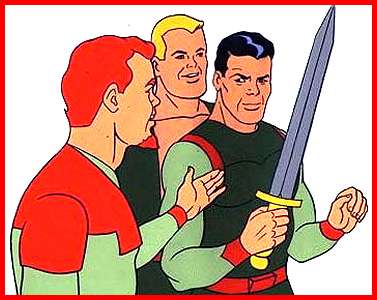
Len Carlson, the voice of Rocket Robin Hood, died on Jan. 26 at age 68. He only had 994 years to go until the astounding year, 3000.

Thursday, January 26, 2006


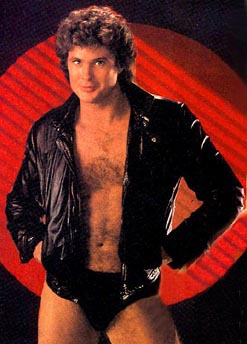
Hasselhoff does it all — while singing Hooked On A Feeling.
http://www.youtube.com/watch?v=Gi2CfuqcUGE

Thanks to Brad McDermott for the link.

Aside from waiting more than 20 minutes for a late bus in the frigid cold, yesterday was a pretty good day and night.
I spent a small part of the afternoon sending e-mails back and forth with George Karrys, who won a silver medal curling at the 1998 Winter Olympics in Nagano, Japan. He's now the publisher of The Curling News. We found out that we both share a passion for curling (though he's actually very skilled at it, and I'm just good at yelling and drinking and can do a decent job of sweeping) and punk rock and are now looking to get together to throw some rocks and have some beers. George gave me a tip on a curling-rock connection in Sweden, and I put my own spin on it here:
http://www.chartattack.com/damn/2006/01/2405.cfm
George just may have usurped Ed Werenich's place as my favourite curler.
I saw Brittlestar perform at Lee's Palace. I saw David Curtis and Laura for the first time in months. I got caught up with Stewart, Allan and Jay from Brittlestar during the really bad Citizen A set that followed theirs. Then, when I got home, there were a couple of issues of Word: Canada's Magazine for Readers + Writers waiting for me. My interview with Dave Bidini about his book, The Best Game You Can Name, is on page three. But what actually excited me, for some strange reason, was seeing my small writer's profile at the end of the article. It made me smile when I read this in print:
Steve McLean is a freelance writer, reporter and editor who can be reached at lagace@pathcom.com. Steve chose Jean-Guy Lagace as his boyhood road-hockey role model when he read on the back of his 1973-74 Pittsburgh Penguins hockey card that "Jean-Guy is a master of the hip check."
My odd obsession with Jean-Guy is now officially in print. It's just too bad that, after years of trying to track him down, I finally did (actually, Warren Campbell did, and then passed the info on to me) and sent him a letter to tell him about how I always pretend to be him when I play road-hockey. I told him that I had a few of his hockey cards that I'd be honoured if he'd sign for me. I never heard back from him. My respect for the man may be dwindling. But for those of you who may have been wondering what my e-mail address meant, now you know.
If you don't want to fork out $5 for the magazine, you can go to http://www.themercurypress.ca/word/ and then open the November-December 2005 .pdf file to read the article.

Sunday, January 22, 2006

I was just listening to Ned Sublette's Cowboy Rumba, which was released by Palm Pictures in 1999 and which is still available through Rykodisc. Sublette is a Texan who I first became aware of through his recording of the traditional cowboy song, Rye Whiskey, 20 years ago. And while he's still lyrically influenced by American country traditions, he's also very involved in Latin music — particularly from Cuba. Cowboy Rumba takes Latin music played by musicians from Cuba, the Dominican Republic and Puerto Rico and uses it to propel his hurtin' tales. It's a unique amalgamation and it's been too long since I've played it. If you can't imagine Ghost Riders In The Sky as a merengue, go to http://www.rykodisc.com/RykoInternal/Features/435/tracks.htm for a sample.
I discovered Sublette's version of Rye Whiskey on a 1985 compilation from the British label, Anagram Records. The album was called Leather Chaps And Lace Petticoats: Welcome To Alternative Country. In David Goodman's 1999 book, Modern Twang: An Alternative Country Music Guide and Directory, he cites this album as being the first place to use the phrase "alternative country."
Though the album is long out of print, it's a treasured part of my collection. Here's the track list:

Bluberry Hellbellies - Hootin' And A Howlin'
Peter Rowan with Flaco Jimenez & The San Antonio Tex Mex Band - Free Mexican Air Force
Bad Mad Missouri Buffalo and The Everglade Alligators - Kickin' Som'
Mighty Lights Of Paradise - Foundations Of Love
Boothill Foot Tappers - Get Your Feet Out Of My Shoes
Meat Puppets - Magic Toy Missing
Ned Sublette - Rye Whiskey
Screamin' Sirens - Your Good Girl's Gonna Go Bad
Helen and The Horns - Freight Train
Riverside Trio - I've Only Just Turned 21
Way Out West - Mystery Blonde
Dolly Parton - Two Little Orphans
The Orson Family - Pointed Bra
Raunch Hands - Stomp It

Speaking of British alt.country, I struck up a friendship with the pioneer of the genre in that country, Hank Wangford, when I lived in London during the summer of 1987. I'm not sure why he didn't make it on to the album.
In his other life, Hank is a respected doctor (Dr. Sam Hutt) specializing in sexual healthcare, contraception and gynaecology and become friends with Gram Parsons (who played Hank's guitar and helped introduce him to country music), Keith Richards, Pink Floyd, The Who and the Grateful Dead. He's also the man who turned Billy Bragg on to country music. Hank has recorded albums, toured extensively, written books and travel articles for the Guardian, shot BBC documentaries, hosted BBC Radio shows, starred in a one-man show at the Edinburgh Fringe Festival, appeared in TV commercials, continued to serve as the president of the Nude Mountaineering Society, trained doctors and nurses in Bosnia and Georgia and set up a women's health clinic in Transylvania, Romania.
Hank gave me a Hank Wangford Band EP, which I donated to my campus radio station, and his Rodeo Radio album, which I still have. Neither are in print any longer. Hank and I kept in touch briefly after I returned to Canada, but we haven't been in contact since 1987. While he's still active musically, I haven't heard any of his recent material and I'm positive that he's ever played in Toronto. If any of you are familiar with his recent work, which is probably only available in the U.K. or via the Internet, I'd love to get your feedback.

np Steelers 24 Broncos 3

Thursday, January 12, 2006


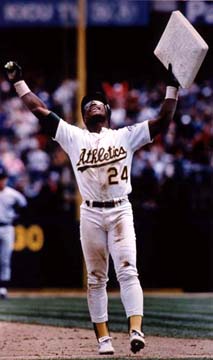
I love when the worlds of music and sports collide, so I was quite amused when I came across Will Johnson's top 10 Rickey Henderson haikus of 2005. Johnson is the main main for Centro-matic, which has a new album called Fort Recovery coming out on March 7 through Misra Records, and South San Gabriel, which released The Carlton Chronicles last year. Henderson is the all-time Major League Baseball leader in stolen bases and, according to some people, the greatest lead-off hitter ever. Thanks to Michael Mayer for passing these along:

Rickey Henderson
Thank you for ending career
It was beyond time

"Rickey is not here"
"Please call Rickey back later"
Is what Rickey said

No one to talk to?
Maybe talk to yourself now
In the third person

Please put third base down
I know you broke the record
But there's more game left

You are not Lou Brock
You have stolen more bases
But, not cool like Lou

Back in eighty-nine
Your first World Series title
Bash Brothers on 'roids?

You wore blades glasses
Long before they were deemed cool
Fashion pioneer

Do you know the way
To the baseball old folks' home?
Let me show you now

Finally retired
World Series of Poker now
To keep you busy

When you were drafted
Ford was U.S. president
I was fucking five!

Tuesday, January 10, 2006

I probably listened to The Fall as much as any band in the second half of the '80s. Even though Mark E. Smith continues to work at a prolific rate and has now released 26 Fall albums, I haven't kept up. Every time I'm in SoundScapes I consider picking up a Fall record, but there have been so many in the last 10 years that I don't know which one to get and I always put one back on the shelf. But I found the following article to be intriguing. More than 40 people have served under Smith, a stern taskmaster, in The Fall over the years. A writer for England's Guardian newspaper tried tracking them all down. Even if you're not a Fall fan, it's worth a read just to get an idea about the crazed genius that is Mark E. Smith.

http://www.guardian.co.uk/arts/features/story/0,11710,1678307,00.html

np Stereo Nation - I've Been Waiting

Sunday, January 08, 2006

If you pick up the new For A Decade Of Sin: 11 Years Of Bloodshot Records two-CD set, and you should because it's one of my favourite labels and there's a lot of good stuff to be found among its 42 tracks, check out the photos in the booklet. You'll find a shot of Steve Jordan in the crowd at a South By Southwest Music Festival show. I think I recognize Craig Laskey's forehead and hairline a few people in front of Jordan in the same picture, but I'm not 100-percent sure about that one.

np The Bottle Rockets - A Living Hell

Friday, January 06, 2006


Neko Case played a show in the intimate confines of The Rivoli on Wednesday night while in Toronto to promote her Fox Confessor Brings The Flood album, which comes out through Mint/Outside on March 7.
She kept apologizing that she had a cold and sounded nasally, but I thought that her voice sounded as exquisite as anytime that I've seen her — which must be getting close to 10 or 12 times by now. While concentrating primarily on new material, she also performed a few older favourites during her set, which lasted 85 minutes with the encore. But much of that time was spent engaged in witty banter with backing vocalist Rachel Flotard from Visqueen. They're both smart, sassy and sexy — just the way I like my women.
Neko came by to say "Hi" before and after the show, and she called me sexy during the second visit. I suppose I could pass away in my sleep sometime before dawn tomorrow content in the knowledge that I'd achieved that goal, as trivial as it probably is.
I interviewed Neko on Monday, so you'll have to keep checking ChartAttack.com for that in the coming weeks.
She'll be back in Toronto on Feb. 3 and 4 for The Sadies extravaganza at Lee's Palace. The guys, who were amazing on New Year's Eve, will be recording a live album and DVD with many of the artists they've accompanied over the years, including Jon Langford, Jon Spencer, Gary Louris, Kelly Hogan, The Good Brothers, members of Blue Rodeo, Neko and other guests that haven't been announced yet. I've got my fingers crossed that Andre Williams will be one of them. If it's at all possible for you to get to at least one of the shows, don't hesitate. I have a feeling that tickets will probably sell quickly, and this is something that you won't want to miss.
Sorry for that photo of Neko. She looks much better in person.
Those of you who know The Stranglers' 1977 song, Bring On The Nubiles, probably realize that its language isn't for the easily offended. But you probably don't realize just how rude it is until you listen to Cocktail Nubiles, a sort of slowed down lounge jazz version of the song where the lyrics are much more audible. I listened to it for the first time in quite a while today and it put a smile on my face. You can find the song as a bonus track on EMI's 2001 reissue of 1981's La Folie album.
Thanks to Heather Morgan and Greg Bennett for passing these links along. There are only 350-something shopping days until Christmas. Maybe someone you love would appreciate finding some of these in their stockings.

Jesus kitsch:
http://www.goingjesus.com/easter/easter.shtml

Faith chips:
http://www.kerusso.com/detail.taf?listing_id=1524&r=790383225

Astronaut Jesus:
http://www.doma.tv/ftpdoma/detalle.php?seccion=5&codigo=86

Jesus, the talking doll version:
http://money.cnn.com/2005/04/12/news/midcaps/jesus_dolls/index.htm?

Cross in Bottle:
http://www.melonride.com/Wunder/curiossample10.html

God Bless our Truckers:
http://www.disturbingauctions.com/view.php?item=23

Wednesday, January 04, 2006

My friend Tima went to see They Might Be Giants in Brooklyn for New Year's Eve. The band did a medley of venue songs that she quite enjoyed, so she sent me this link to some of them. I've been a TMBG fan for almost 20 years, so it's good to see that they're still doing fun and fresh things. Here's the link if you want to check to see if there's a song about your favourite club:
http://www.tmbg.com/